Cemetery says you need a vault? What to ask before you buy the second box
Most cemeteries require an outer burial container, but the rule is usually narrower than the price list suggests, and the written version is worth reading first.
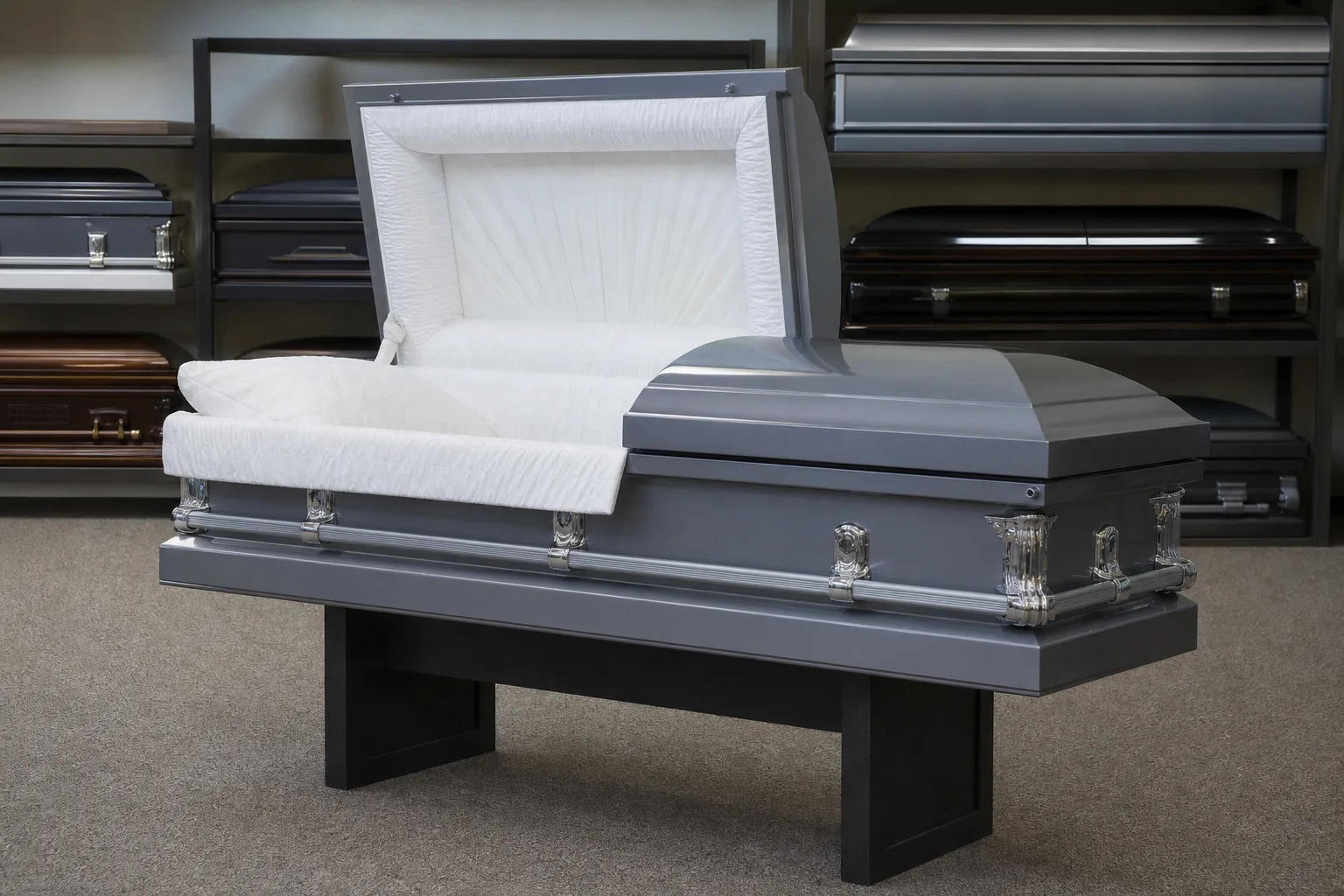
In most states the law does not require an outer burial container. The requirement comes from the individual cemetery's own adopted rules, which is why it varies from one burial ground to the next.
The casket is the purchase people prepare for. The container the casket goes inside is the one that arrives late in the conversation, usually after the price list has been folded over once and a total has already formed in someone's head. Cemeteries, not funeral homes, are the source of the requirement, and cemeteries vary. A careful reader treats the outer burial container as a separate decision with its own rule, its own price range, and its own set of questions, rather than as a line item that follows automatically from the one above it.
The requirement is about the ground, not the body
A grave that has nothing rigid in it settles. Wood and metal give way over years, soil drops into the void, and the surface develops the dips that older sections of small cemeteries show clearly after a wet spring. That sinking is a maintenance problem: mowers catch, markers tilt, and the grounds crew regrades the same plots repeatedly. An outer container carries the weight of the earth above it so the surface stays level. State law rarely requires one; the cemetery's own rules almost always do, and that distinction matters when someone tells you the container is mandatory.
A liner and a vault are not the same object
A grave liner, sometimes called a box or a sectional liner, is unlined concrete with a lid set on top, and in some designs it has a bottom opening or slots by intention. It holds the soil load and does nothing else. A burial vault is built to the same job but adds a sealing element: a gasket or tongue-and-groove joint, and usually an inner lining of plastic, fiberglass, bronze, copper, or stainless steel bonded to the concrete. Sealing resists water for a time. It does not preserve anything indefinitely, and no honest seller will tell you it does.
What each costs, and where the spread comes from
Specific figures belong to specific price lists, dated, from the cemetery or funeral home you are actually dealing with. The shape of the range is consistent, though. A plain unlined concrete liner is the least expensive item in the category, often by a wide margin, and is frequently sold by the cemetery itself at a set price. A basic sealed vault typically runs a multiple of the liner, and from there the price climbs with the lining material, with bronze and stainless models sitting near the top alongside decorative treatments. The concrete underneath is doing the same work at every price.
Third-party sellers exist for vaults as they do for caskets, though the market is thinner and delivery is harder to arrange, since these are heavy items that require equipment at the grave. The Federal Trade Commission oversees funeral pricing disclosure, and its rules require that outer burial containers be priced separately and that a provider not condition other services on buying one from them. Ask for the written price list. Read the liner line and the vault line side by side before deciding which job you are paying for.
Getting the rule in writing before you shop
Call the cemetery office, not the funeral home, and ask a narrow question: does the cemetery require an outer burial container, and if so, does it accept an unlined liner or does it require a sealed vault? Ask them to send the relevant page of the rules and regulations, by email or a photocopy. Municipal and township cemeteries often have short rule sheets adopted by the board, and they will hand one over without hesitation. Note the date on the document. Note also whether the rule differs by section, since older sections sometimes carry different terms than newer ones.
The second question worth asking is who installs the container and whether the cemetery charges separately for setting it, opening the grave, and equipment. Those charges belong to the cemetery and are unaffected by where the container itself came from. A reader who has the rule sheet, the cemetery's price list, and the funeral home's price list on the same table can see the whole cost of the burial rather than the part that arrived first, and can tell quickly whether a sealed vault is a requirement or an upgrade being described as one.
Most families find, once the page arrives, that the requirement is narrower than the conversation suggested: a container of some kind, meeting a stated dimension, installed by the cemetery. That leaves the choice between unlined concrete and a sealed vault where it belongs, with the person paying.
| Ground settlement | Without something rigid in the grave, soil eventually drops into the space the casket occupied and the surface sinks. Level ground is a grounds-maintenance concern more than anything else. |
| Liner defined | A grave liner is plain concrete, typically a box with a lid, sometimes with drainage openings by design. It supports the soil load and makes no claim to keep water out. |
| Vault defined | A burial vault adds a sealing joint and an inner lining of plastic, fiberglass, bronze, copper, or stainless steel. The concrete shell does the structural work; the lining is what raises the price. |