No state requires a casket. Three separate questions decide what you actually buy
I wanted to know whether the vault my cemetery quoted was an actual rule or a house preference, so I read the price lists line by line
- Itemized pricing in writing A general price list separates the container from professional services, transport, facility use, and the vault. Without it, the total is a single number that cannot be examined line by line.
- Outside purchase is routine Suppliers ship directly to funeral homes as ordinary business, and a provider may not add a handling fee for accepting a container a family bought elsewhere. Delivery is a scheduling matter, not an obstacle.
- Rental caskets A rental casket used for a viewing, with a separate inner container for the cremation itself, is an optional line rather than a required one. Whether it appears depends on the kind of service being held.
If a cemetery requires an outer burial container but is indifferent to what sits inside it, the mandatory cost is on the outside. Knowing which piece is compulsory helps decide where the budget belongs.
Where the required spending goes
Most people arrive at the container decision believing it is one decision, made once, under time pressure, from a room of samples. It is closer to three decisions, and they are decided by three different parties who rarely explain that they are separate. The first is what the law obliges you to do, which is very little. The second is what the cemetery or crematory will accept, which varies block by block. The third is what the funeral home is accustomed to selling, which is not a rule at all. Costs attach differently to each.
What state law actually requires
No state statute requires a casket for burial, and none requires one for cremation. What statutes do address is transport, refrigeration or embalming after a set interval, permits for disposition, and who may sign for what. A body must generally be in some container for handling and transport, but the statutory language tends to describe a rigid, leak-resistant, respectfully enclosed container rather than a manufactured casket with hardware and a finished interior. Reading the actual health code section for your state, which is usually a page or two, is the cheapest research anyone can do here.
The gap between that legal floor and the average sale is where most of the money sits. If you assume a casket is mandatory, you never price the floor, and you never learn what the difference between the floor and the display room is worth to you. It may be worth a great deal. Families choose polished hardwood for reasons that have nothing to do with compliance, and that is a legitimate use of money. The point is only that the choice should be made knowingly, with the legal minimum understood as a real option rather than a theoretical one.
What the cemetery or crematory will accept
Cemetery policy is private policy, enforceable as a condition of the deed or the interment contract, and it is where genuine constraints usually appear. A cemetery may require an outer burial container to keep the ground from settling, may specify dimensions for its grave openings, and may set rules about handles, weight, and how the container is lowered. Crematories commonly require a combustible, rigid container with a flat bottom, no metal hardware, and sufficient strength to be handled without flexing. None of that requires a casket. All of it requires a phone call.
Ask the cemetery office three plain questions and write down the answers: is an outer container required, what are the maximum outside dimensions of the grave opening, and is there a policy on containers not supplied by a funeral home. The answers are usually short, often more permissive than expected, and occasionally surprising in ways that would have been expensive to discover on the day. Cemetery staff answer these questions constantly and are generally happy to. The call takes a few minutes and can change the shape of the whole purchase.
What the funeral home prefers, and what it may not do
The third question is the softest, and the one most often mistaken for the first. Funeral homes have display rooms, supplier relationships, and habits, and their staff will describe what they usually do. That description is not law and not cemetery policy. The Federal Trade Commission oversees how funeral goods and services are priced and disclosed to consumers, including a provider's obligation to give itemized pricing and to accept a container the family obtained elsewhere without charging a handling fee for it. Knowing that changes the tone of the conversation considerably.
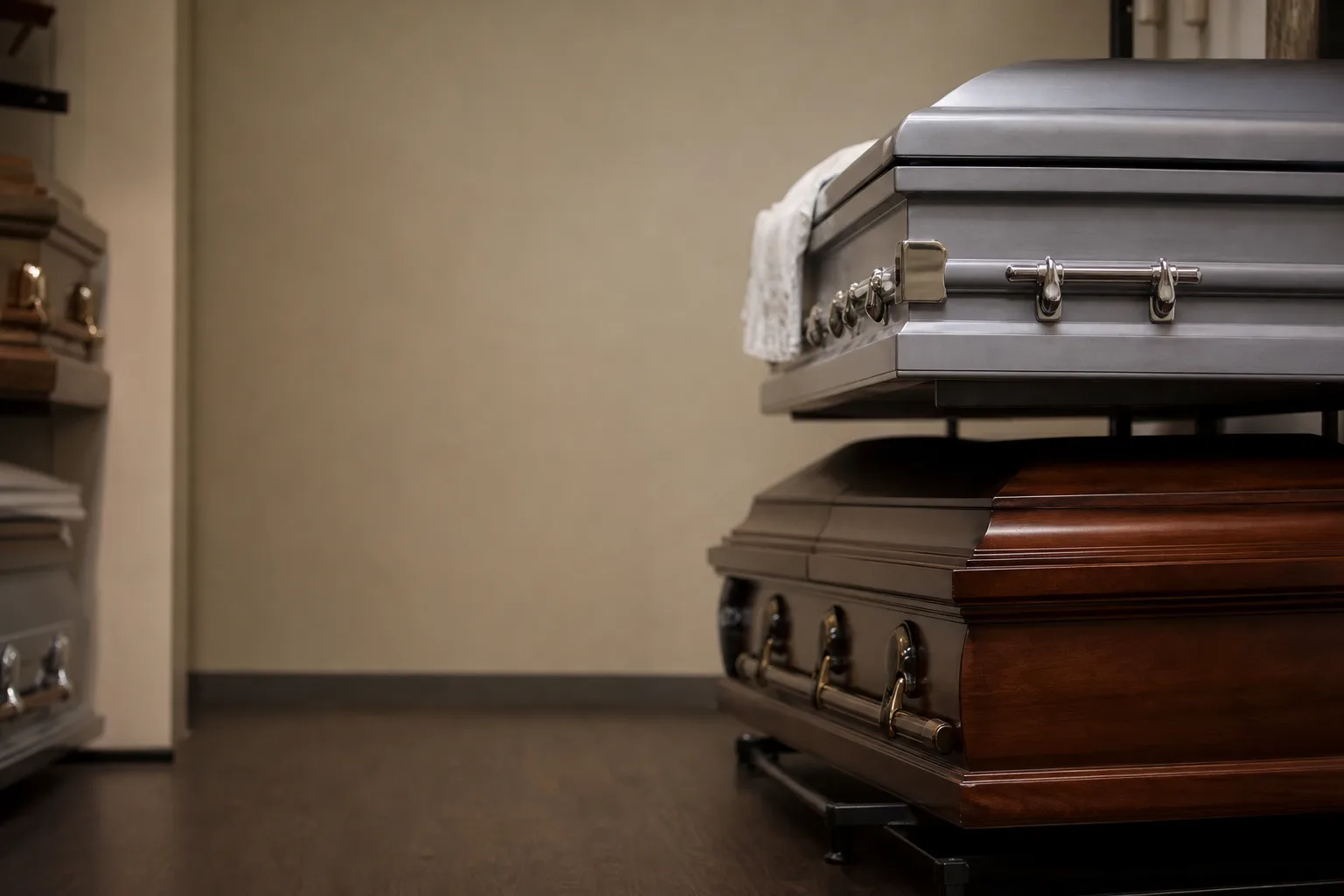
Outside suppliers ship directly to funeral homes as a routine matter, and delivery timing is a logistics question rather than an obstacle. Coffins and caskets are both sold this way, and comparing an outside price against the display room price is straightforward once you have the itemized general price list in hand. Ask for that list early, in writing. It separates the container from the professional services, the transport, the facility use, and the vault, and it lets you see which line you are actually negotiating.
How the three questions change the total
Separating the questions rarely produces one dramatic saving. It produces several small ones and one useful piece of clarity. You may find that the cemetery requires an outer container but is indifferent to what sits inside it, which means the money is better spent on the part that is mandatory. You may find that a direct cremation with a plain rigid container satisfies the crematory completely, and that the rental casket for a service is a separate, optional line. Each of these is a decision you can price. Together they usually move the total by a real margin.
The clarity matters as much as the arithmetic. Families who understand which constraints are legal, which are contractual, and which are simply customary make faster decisions and second-guess them less afterward. The container becomes a considered purchase rather than a default one, and the reasoning survives the week. That is worth something on its own, quite apart from what appears on the invoice.
The order to work in is fixed: read the statute, call the cemetery, then ask the funeral home for the itemized list. Three short tasks, done in that sequence, and the purchase looks entirely different by the end of them.